
Share Joel "Jody" Stanton Brecheen's obituary with others.
Invite friends and family to read the obituary and add memories.
Stay updated
We'll notify you when service details or new memories are added.
You're now following this obituary
We'll email you when there are updates.
Select your format and elements to print

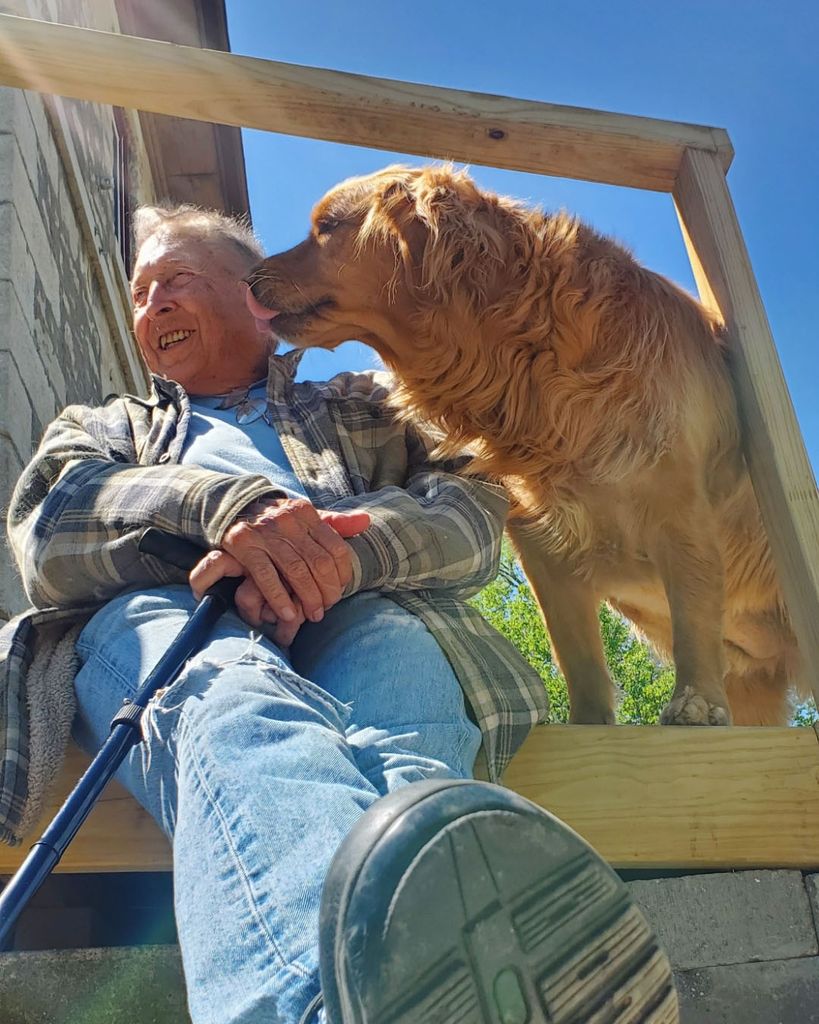


Joel "Jody" Stanton Brecheen
Aug 17, 1937 — Jul 1, 2026
Joel Stanton “Jody” Brecheen died peacefully at home on the afternoon of July 1, 2026, under the compassionate care of Lee County Hospice, with his daughter, son-in-law, and a few faithful furry friends quietly keeping watch. He was 88 years old.
Jody Brecheen lived a life shaped by work, curiosity, discipline, recovery, music, family, and an enduring search for understanding.
Born in Texas, he grew up in a world that taught him early about responsibility, resilience, and uncertainty. His father returned from World War II injured, and his mother carried much of the family's burden with strength and determination. From her, he inherited a love of music. From life, he learned grit.
Though he would later become known for his intelligence, his path was not always obvious. As a young man, he found his footing through reading, writing, and a remarkable mind that seemed able to absorb and retain ideas with unusual ease. He attended The University of Texas and began his professional life as a teacher before moving into management, where he would spend decades leading large groups of employees.
He believed in showing up, doing the work, and helping people succeed. Many who worked alongside him remembered a manager who expected much but trusted people with responsibility. He was known for giving employees flexibility to care for their families and manage their lives, provided they honored their commitments. He often arrived first and left last so others could enjoy freedoms he rarely allowed himself.
Those who knew him well often described him as one of the smartest people they had ever met. He possessed an extraordinary memory and could recall meaningful passages, philosophy, recovery principles, and stories years after first encountering them. He was a lifelong reader whose bookshelves held everything from Marcus Aurelius and William James to Richard Bach, Mark Twain, recovery literature, and spiritual writings. He was endlessly interested in how things worked—people, organizations, engines, ideas, the human body, and life itself. Despite his remarkable intellect, he remained surprisingly humble about it, often deflecting compliments with humor and self-deprecation.
He met his future wife as a young lifeguard in Wichita Falls. Together they built nearly sixty years of shared life. They were very different people. She treasured keepsakes and memories. He accepted that change was inevitable. She once described him simply as, "the smartest man I ever knew."
He served briefly in the Army, loved BMW motorcycles, cared for his cars meticulously, and maintained a disciplined commitment to physical fitness for much of his life. He lifted weights for decades, logged workouts faithfully, and could jump rope with a speed and rhythm that left a lasting impression on his daughter, who can still hear the cadence of the rope striking the driveway long after childhood had passed.
He worked hard. By his own account, he worked, mowed the lawn, and worked some more. Family vacations were rare, though he occasionally made time for museums, art festivals, and experiences that reflected his curiosity about the world. Structure was his comfort and discipline his companion.
Yet beneath that structure lived a curious spirit. He loved looking at the stars. In later years, he delighted in spotting figures in clouds drifting above the Mississippi River. He often reflected on life's larger mysteries and believed people should find their own spiritual path. Though raised Catholic, he eventually found much of his spiritual home through recovery, reflection, and the search for meaning.
Music followed him throughout his life. Influenced by folk music, blues, and traditional songs, he enjoyed his guitar books, records, and melodies that stayed with him for decades. He loved artists such as Glen Campbell, Judy Collins, Carl Sandburg, John Denver and could be heard singing songs like Goodnight Irene, The Boll Weevil Song, What Do You Do With a Drunken Sailor?, Sweet Surrender, and Poems, Prayers and Promises. Music had a way of reaching parts of him that words alone could not. When his daughter was in second grade, she called him at work and asked him to be her show-and-tell. He arrived carrying his guitar and played for her class. Years later, she still remembers the excitement she felt hearing the familiar click of the guitar case opening.
Sober for nearly half a century, he became a source of wisdom, encouragement, and guidance for countless others. Through Alcoholics Anonymous, sponsorship, and friendships formed along the way, he helped many people navigate difficult roads. He had an uncommon ability to recognize each person's individuality and quietly invest in fellow travelers, often walking beside them through seasons of recovery, joy, loss, and change. Saturday mornings cleaning the meeting hall in Arlington, Texas, long conversations over the phone, countless cups of coffee, and simple acts of showing up became his ministry. More than one friend would later say his steady voice not only helped keep them sober—it helped keep them alive. His friendships were rarely casual. They were often lifelong, deeply loyal, and built one conversation at a time.
He loved animals deeply. He fed feral cats, worried over injured creatures, and was known to tear up over animals both on television and in real life. He possessed a tremendous capacity for compassion, though he often expressed it through action more than sentiment. If you helped him, chances were good he would reward you with something sweet. Donuts, cookies, brownies, cake, and candy became a language all their own. Following back surgery, he insisted on delivering cakes to the nurses who had cared for him in the hospital. Gratitude mattered to him.
He was not an easy man, nor would he have claimed to be. He worried. He analyzed. He examined problems from every angle. He could be intense, stubborn, opinionated, and difficult. He also possessed humility, self-awareness, and a willingness to keep trying. In his later years, he kept notebooks where reminders about surrendering his destiny to a Higher Power appeared alongside ordinary daily tasks. It was a fitting reflection of the man himself: one foot planted firmly in practical reality, the other always reaching toward larger questions.
One of the great gifts of his later life came when he moved to Iowa to live near his daughter and son-in-law. What began as a practical decision became a deeply meaningful final chapter. Surrounded by family, birds, books, conversations, sweets, and the rhythms of daily life, he remained engaged with the people and ideas he loved. He often remarked on the kindness, steadiness, and character of his son-in-law, Doug, whom he greatly admired. The slower pace of life suited him, leaving more room for long conversations, quiet reflection, and the simple pleasures that had become increasingly important to him.
He also carried sorrows. Among them was the difficult path of a beloved son whose struggles remained a source of heartbreak throughout his life. As he would sometimes say, "Some things are just sad."
In his final months, although his body steadily weakened, his mind remained remarkably clear. He continued reading, questioning, quoting philosophy, talking with old friends, watching the news, and wondering aloud about whatever mystery might come next. One morning he quietly observed, "In the big scheme of things, I'm alright." It was a perspective he had spent a lifetime trying to cultivate. Those who called during those final weeks often found the same man they had always known—still curious, still thoughtful, and still interested in them.
He once remarked that it mattered little where his ashes were scattered because eventually he would become part of the fox, the snake, the earth, and the ongoing cycle of life itself.
There was truth in that.
Still...
The Texas boy deserves to go home.
He leaves behind his daughter, JoDeeAnn, and son-in-law, Doug, who faithfully shared in his final chapter; a son whose journey brought both love and great sorrow throughout his life; two beloved bonus grandchildren, Jake and Emme, whom he adored; dear friends, fellow travelers in recovery, former colleagues, and countless people who continue to bear the imprint of his intelligence, guidance, humor, compassion, discipline, and hard-earned wisdom.
He will be remembered not as a perfect man, but as a wonderfully, gloriously human one—brilliant, funny, opinionated, occasionally exasperating, wise, sometimes a little egotistical, unexpectedly tender, endlessly curious, and always searching. He spent a lifetime trying to understand how things worked—from engines and organizations to recovery, spirituality, and the human heart—and he never lost his sense of wonder about the mystery of life itself. If the stories shared since his passing are any indication, perhaps his greatest legacy wasn't simply the life he lived, but the countless lives he quietly helped others keep living.
At Dad's request, there will be no funeral service.
His ashes will be returned to Texas and scattered where the Chisholm Trail once crossed the landscape that shaped his earliest years and never quite left his heart.
If you'd like to honor his memory, don't send flowers.
Instead, take someone unexpected a cake.
Or cookies.
Or donuts.
Then do it again.
Leave them with the receptionist who always greets you kindly. The nurses who cared for you. Your dental hygienist. A volunteer. A lonely neighbor. Someone whose quiet kindness often goes unnoticed.
Dad believed gratitude should be delivered.
Preferably with sugar.
It was a good ending to a complicated, curious, wonderfully human life.
Guestbook
This site is protected by reCAPTCHA and the
Google Privacy Policy and Terms of Service apply.
Service map data © OpenStreetMap contributors